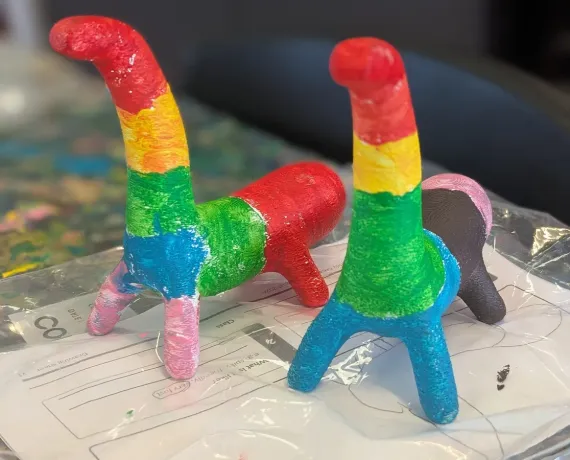
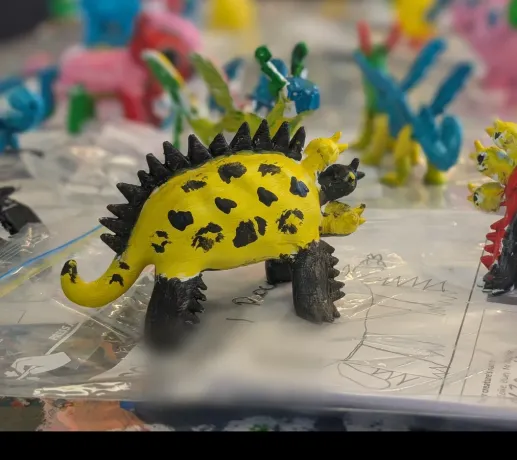
Buddy Creatures is a student's first, hands-on lesson in directing AI. A child's imagination leads the journey, the students judge the machine's work against their intent, and what comes out is a real 3D printed object to keep and offer as a gift.
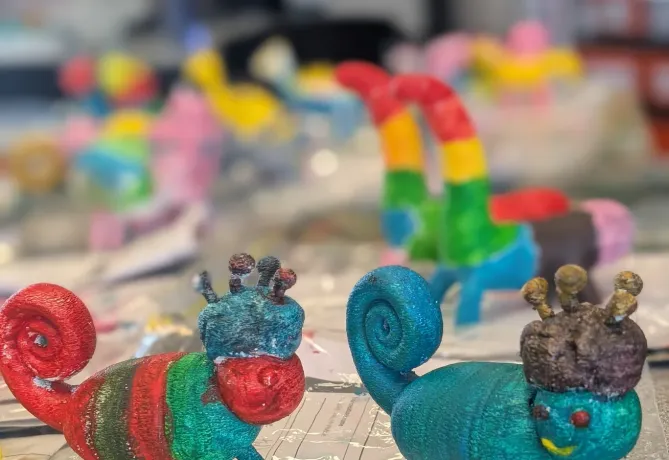
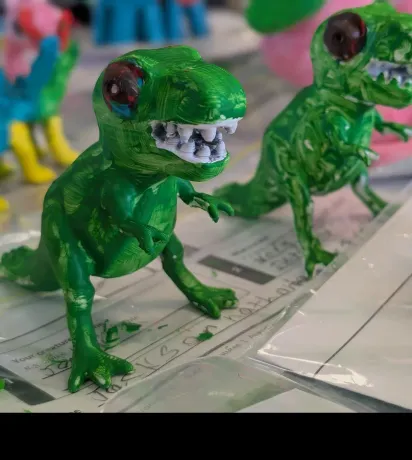
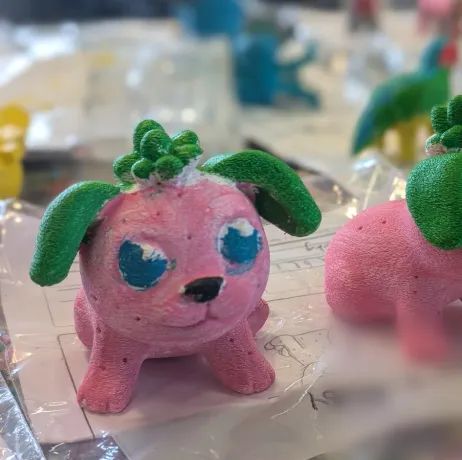
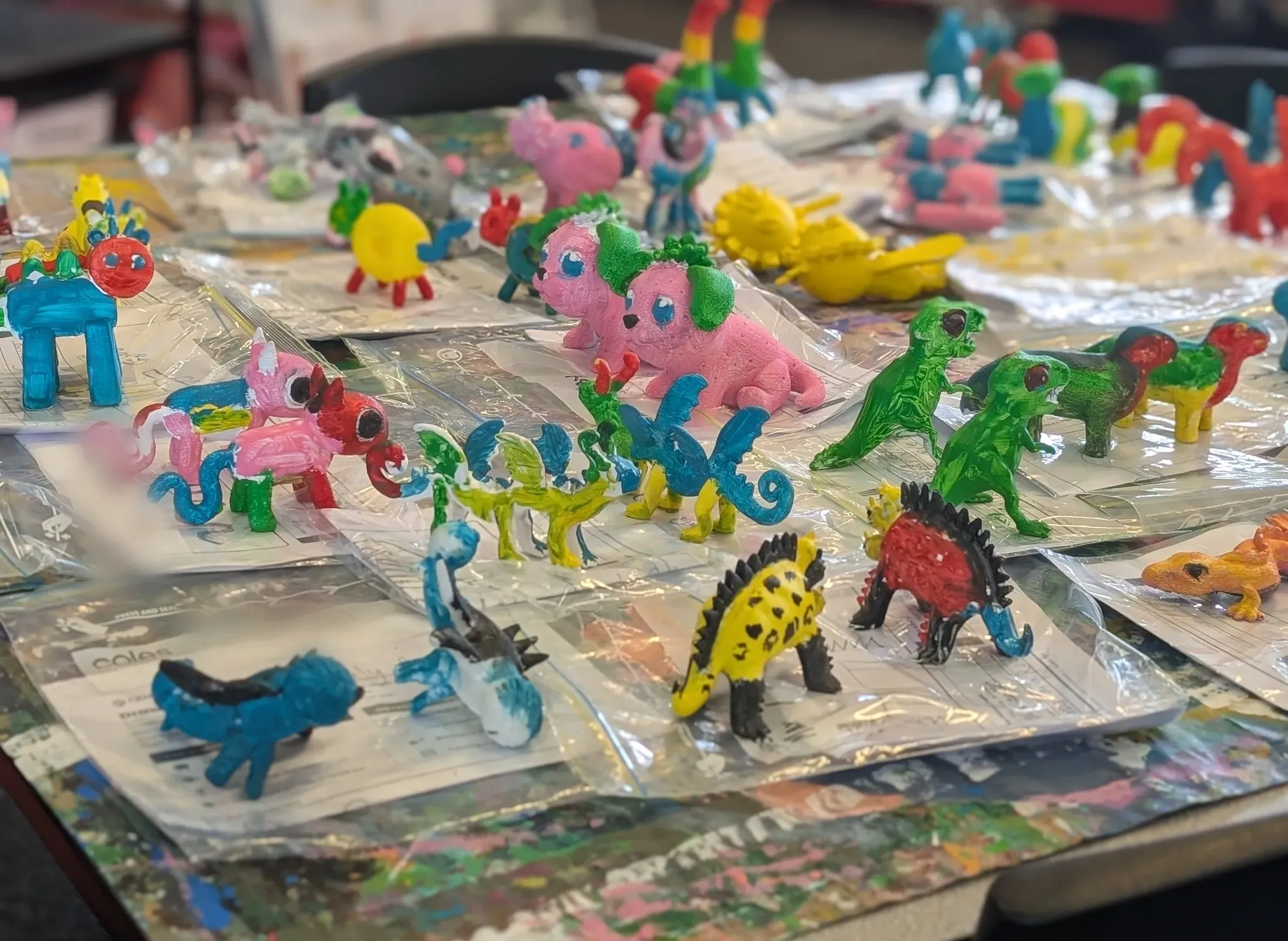
Creatures from the first class through the program, 2026
How a creature is made
One creature, five steps.
Primarily a learning and discovery package for grade 6 students, Buddy Creatures utilises the Prep-Grade 6 buddy program, taking a prep's pencil drawing all the way to the final painted, 3D printed figure, with students learning at each step.
how many legs?
smooth or spiky?
friendly or fierce?
1 · Imagine
Every creature starts as a child's idea.
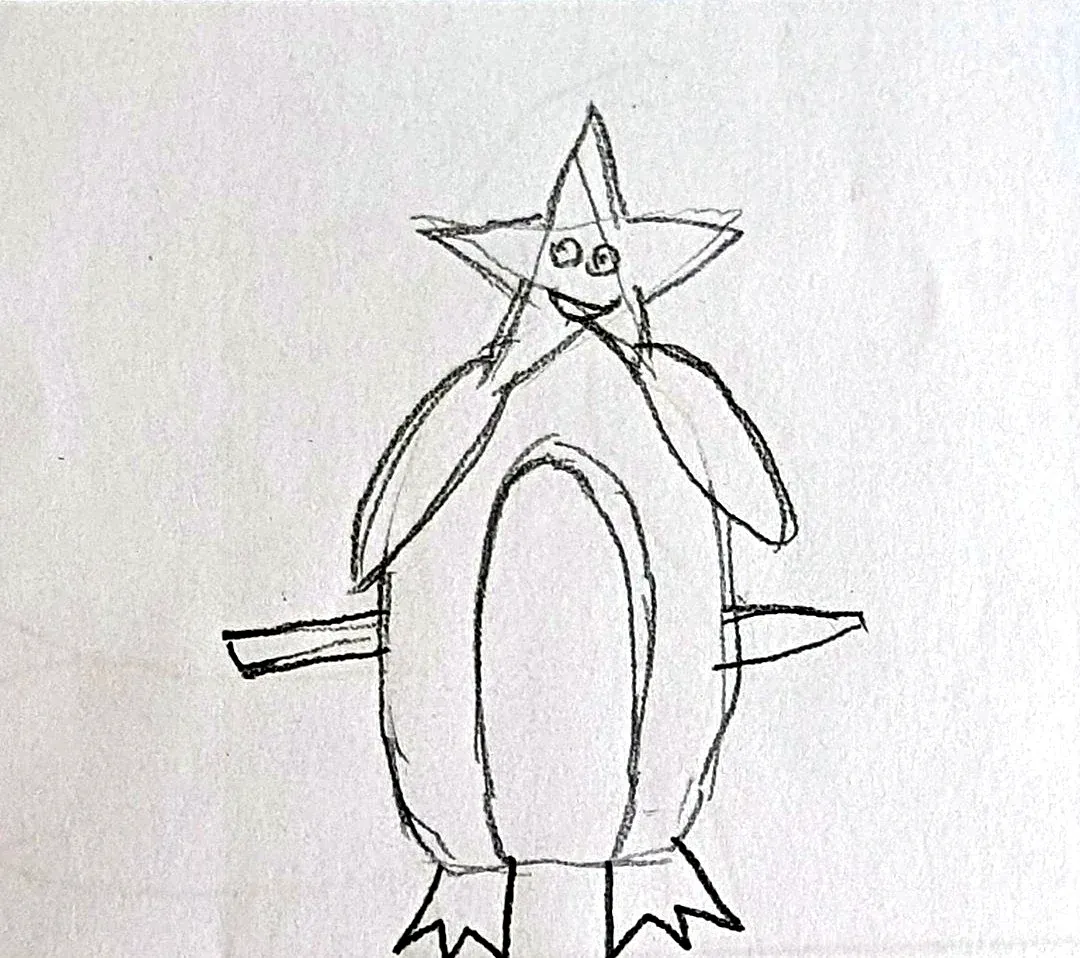
The initial drawing is the brief each older student begins with. Their role is to guide and direct their younger buddy to invent a creature they can develop into a printable model.
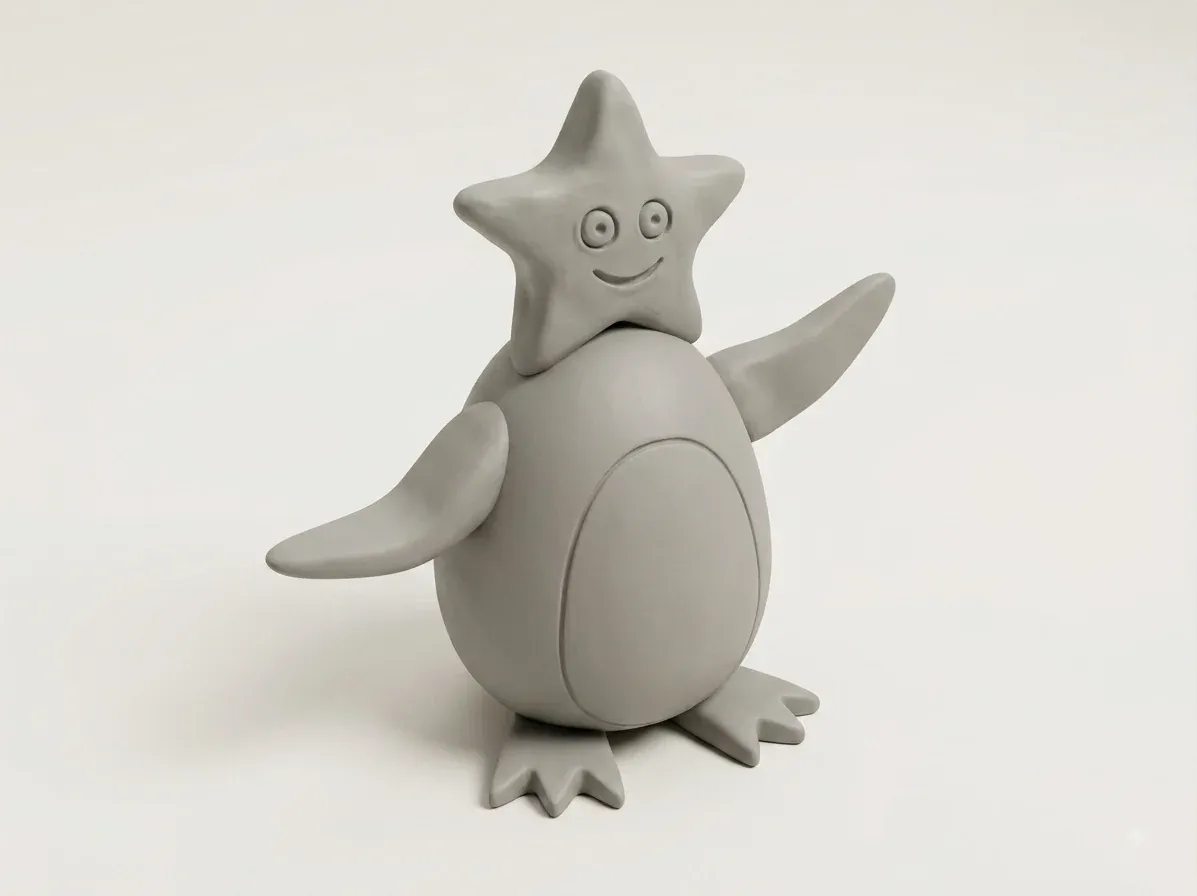
Drawing › AI version
2 · Direct
Students learn to direct AI.
They compare the AI's version with the drawing, decide what it got wrong and tell it what to fix. Judging AI against a standard you set is the skill that matters most.
Drag to turn
3 · Understand
The technology stops being magic.
Students see how a computer creates a 3D shape of their creature, as thousands of dots are joined into triangles. Once they understand how it works, they can reason about why it sometimes fails and how to correct.
Drag to turn
4 · Make
Ideas become real objects.
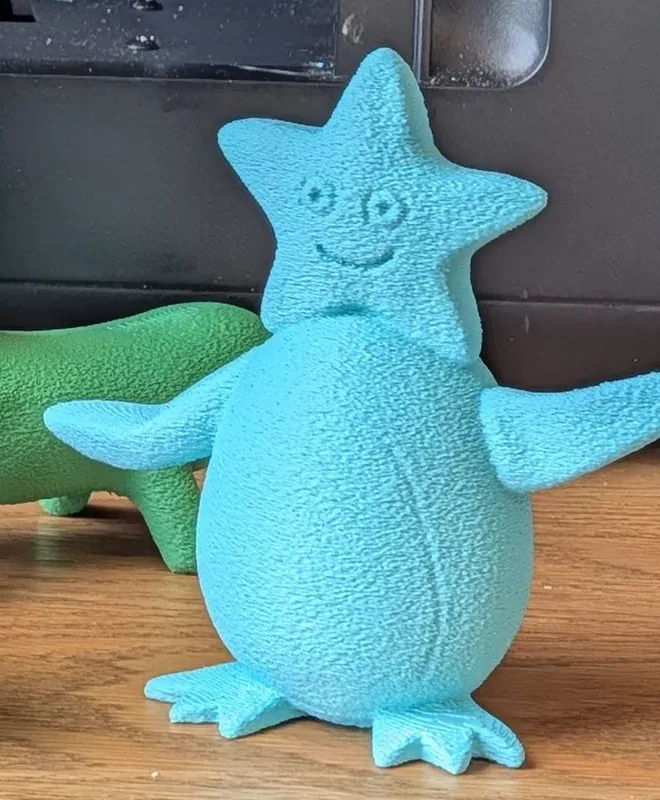
Layer by layer, the design becomes something you can hold. Most schools own a 3D printer. Buddy Creatures offers a project that gives every student a reason to care how it works.
off the printerpainted by the buddy who built it
5 · Give
A few weeks later, they're holding it.
The older buddy paints the creature and gives it to the child who imagined it. Students finish the program having made something with care, for a real person.
Why it exists
Children are growing up with AI. Few are shown how to take charge of it.
For most children, AI is a box that answers questions. Buddy Creatures puts them in charge of directing one. Students start with an idea that belongs to them, use AI to help bring it to life, and stay responsible for whether the result is right. Setting the standard and judging the output is the foundational skill for every AI tool they will meet later in life. Here they learn it through fun and creativity.
Confidence directing AI
Students tell an AI tool what they want, check its work against the original and correct it until it's right. The first step in AI capability, learned by doing.
How technology really works
A drawing becomes a digital model, then a printed object. Students see every step, so the technology stops being a black box.
Creativity with a purpose
Every design starts with a child's imagination and ends as something real. Students see their ideas taken seriously.
Leadership and care
Older students interview, build and present for a younger child. They learn to listen, follow through and hand over work they are proud of.
Safe by design. Students never need an AI account, and no names or faces go near an AI tool. How we keep it safe
Built for the curriculum. Links across Design and Technologies, Digital Technologies, Visual Arts and the general capabilities in the Victorian Curriculum. See the links
The first class, 2026
Every creature stayed true to the child who imagined it.
Each one was drawn by a young student, directed through AI by an older buddy, then printed, painted and handed over.
Bring it to your school
Planning 2027? Bookings for Terms 1 and 2 are open.
A 20-minute call is enough to talk through fit, dates and cost. One visit from ODW, with everything your teachers need supplied. Neighbourhood houses, libraries and community groups are welcome to ask about a tailored program.
From $1,000 per class, plus travel and print materials.
 Drawing › AI version